
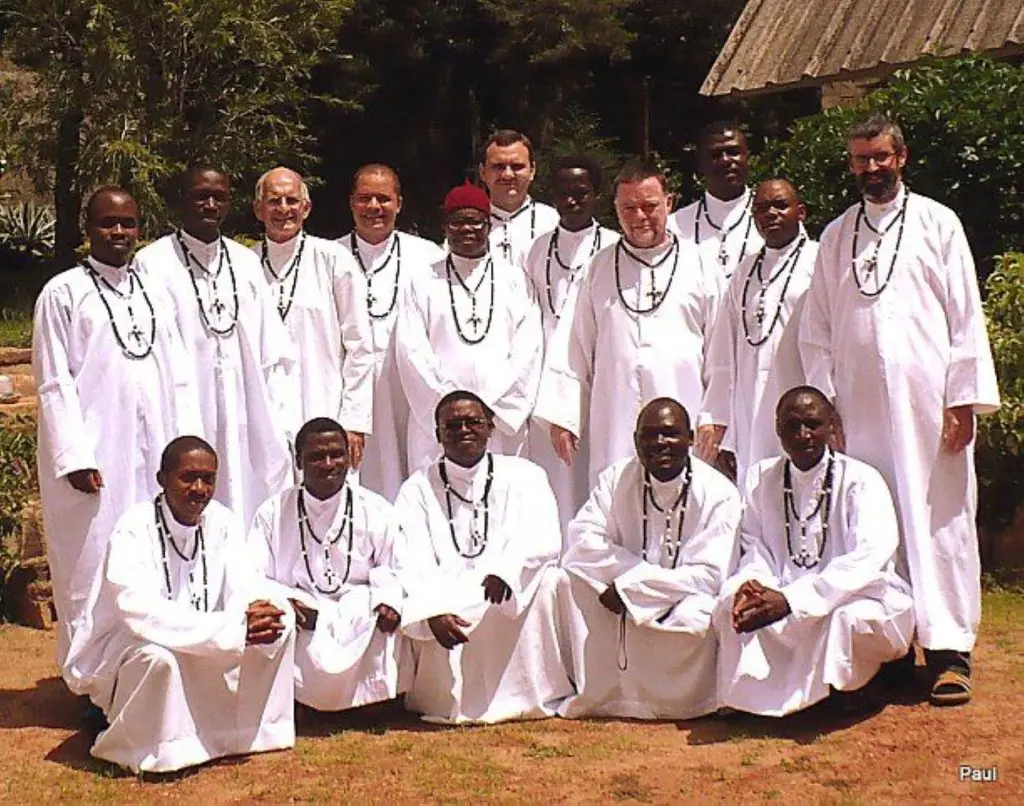
As a missionary priest with the Society of Missionaries of Africa (White Fathers) for more than 30 years, I have been privileged to serve in South Africa, Ghana, Zambia, the Philippines, India, and now in Canada. Most of this time has been as a formator of young men wanting to be missionaries in our congregation, serving the peoples of Africa. Today, these lived experiences provide the backdrop for my new role within the Archdiocese of Toronto.
At the request of His Eminence Francis Cardinal Leo, Archbishop of Toronto, I accepted the role as Director of the Archdiocesan Mission Office at the beginning of September 2025. Among my different responsibilities is that of liaison between the Archdiocese of Toronto and the Pontifical Mission Societies. This meant getting to know the Pontifical Mission Societies.
A missionary finding himself in a new situation takes time to get to know his environment before jumping in with both feet. This means learning languages, culture, and trying to understand the lived situation of the people with whom he will live and work. To do otherwise leads to difficulties and misunderstandings down the road. Since starting in my office in September 2025, I have applied this same approach to get to know the Pontifical Mission Societies.
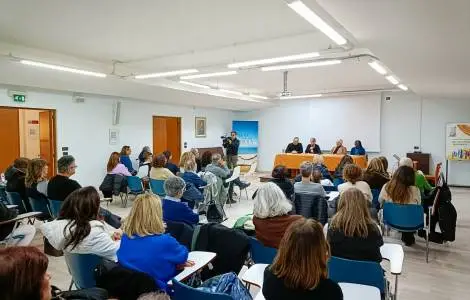
Over the past months, I have gained many insights not only concerning the aims, objectives, goals, and history of the Pontifical Mission Societies in general, but of its four component societies. Early in my mandate, I was fortunate to attend the annual general meeting of the Pontifical Mission Societies-English Canada. Listening to the sharing of Bishop Boissonneau, one of two national directors for Canada at the time, and other diocesan directors, helped to deepen my understanding of the core values of the Pontifical Mission Societies and the valuable part the societies play in promoting the universal mission of the Church. I have regular contact with the office in Toronto, where I celebrate Mass with the team every Monday. Together we seek ways of collaboration between the Pontifical Mission Societies office and the Archdiocese of Toronto.
My years in mission helped me become aware not only of the individual needs of the people around me, but also the needs of the local church. Without the help and support offered by the Pontifical Mission Societies, what the local church in mission territories can do is often limited. With the help and support of the Pontifical Mission Societies, great and wonderful things happen.
As a formator of our candidates in Africa and Asia for 22 years, financial contributions from the Pontifical Mission Societies, especially the Society of St. Peter the Apostle, helped us to provide a well-rounded formation for our candidates, preparing them for the many challenges of missionary life today. Africa continues to be a place of mission, but Africa now sends missionaries to other parts of our world, including Canada. Thanks to the Pontifical Mission Societies, among other organizations, the mission continues!
Mission Sunday 2026 will celebrate its 100th anniversary on Sunday, 19 October 2026. The theme chosen by our Holy Father is “One in Christ, United in mission.” This is an ideal opportunity to give thanks for the work of the Pontifical Mission Societies not only praying for missionaries around the world, but taking concrete actions to ensure that our young, emerging dioceses and parishes not only receive the moral support and prayers needed, but the financial support empowering them to continue the mission of Jesus in our world today, which is, for me, the true meaning of One in Christ, United in mission!
This work is not separate from the Church’s mission — the Pontifical Mission Societies are integral to the Church’s mission.
Fr. Paul Johnston, M.Afr.
